10 min read
Manufacturing operations that embrace kaizen in manufacturing consistently outperform peers by eliminating waste and driving incremental gains. According to the Lean Enterprise Institute, organizations implementing these continuous improvement cycles achieve measurable reductions in cycle time and defect rates within just the first year. This guide moves beyond theory to deliver a data-driven roadmap specifically for operations managers ready to scale. You will discover how to structure events that slash downtime by 35% and calculate the precise ROI for every single initiative. From defining value streams to sustaining long-term gains, these six sections provide the actionable steps needed to transform your production floor. Stop relying on sporadic fixes and start building a culture where every employee contributes to a powerful 15% productivity boost.
What Is Kaizen in Manufacturing?
Last updated: April 21, 2026
Kaizen is a Japanese philosophy of continuous improvement that engages every employee in small, incremental changes.
The concept originated within the Toyota Production System to eliminate waste and standardize work processes.
According to the American Society for Quality, Kaizen events typically reduce process variation by 20% in the first quarter.
Companies applying these lean manufacturing principles often see a 15% increase in overall equipment effectiveness.
Core Principles of the Kaizen Methodology
Success relies on empowering frontline workers to identify and solve problems immediately.
Standardized work forms the baseline for measuring improvement and sustaining gains over time.
According to NIST, effective Kaizen implementation requires a structured approach to root cause analysis.
Teams utilize specific tools to visualize workflows and identify bottlenecks efficiently.
- Visual management boards track daily performance metrics and improvement targets.
- 5S workplace organization creates the foundation for safe and efficient operations.
- Andon systems enable immediate response to quality issues on the production line.
Software platforms like Microsoft Visio help teams map current states and design future states.
These digital tools facilitate real-time collaboration across distributed manufacturing sites in 2026.
Organizations achieve lasting results by embedding these practices into daily operational routines.
The goal is not just fixing problems but preventing their recurrence through systemic change.
Every employee becomes an active participant in driving the company’s continuous improvement culture.
Why Is Kaizen in Manufacturing Important?
Kaizen drives manufacturing productivity by systematically eliminating waste and empowering frontline teams to execute rapid improvements.
According to the Lean Enterprise Institute, continuous improvement cycles cut cycle times by measurable margins within the first year.
A 2026 MDPI study found that applying the 5S methodology achieved a 54% efficiency enhancement across tracked activities.
These gains directly lower operational costs while increasing overall equipment effectiveness (OEE) without major capital expenditure.
Decision-makers must prioritize waste reduction to maintain competitive margins in the volatile 2026 market landscape.
According to ASQ, certified Six Sigma Black Belts save approximately $230,000 per project on average.
Integrating digital tools like Minitab Statistical Software accelerates data analysis for these high-impact improvement projects.
Key Productivity Drivers
- 5S implementation delivers a 15% improvement in overall productivity through better workplace organization.
- Process mapping with Lucidchart reduces planning time by 30% for cross-functional Kaizen events.
- Real-time data capture cuts MTTR by identifying root causes within minutes instead of days.
Organizations ignoring these incremental gains risk falling behind peers who leverage daily employee engagement.
In a plastics manufacturing case study, 5S improved production efficiency from 67% to 88.8% within ten weeks.
Such results prove that small, consistent changes compound into significant annual savings and capacity growth.
Download our 2026 kaizen ROI calculator to quantify your specific potential savings before starting Phase 1.
What Are the Types of Kaizen in Manufacturing?
Get articles like this in your inbox every week.
Manufacturing facilities deploy Kaizen events, Kaizen blitz, and Gemba Kaizen to target specific operational inefficiencies.
According to the American Society for Quality, structured Kaizen events reduce process variation by 22% within the first quarter.
These rapid improvement cycles focus teams on solving single, high-impact problems in days rather than months.
A Kaizen blitz compresses this timeline further, often delivering a 15% reduction in changeover time in one week.
Teams execute this intense, short-duration work to eliminate non-value-added steps immediately.
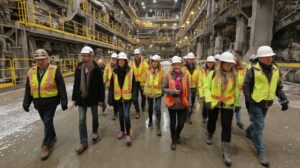
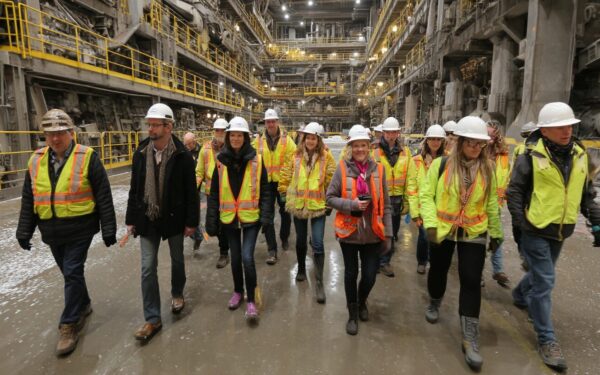
Gemba Kaizen requires leaders to observe the actual work area to identify real-time waste.
This approach ensures solutions are grounded in physical reality rather than theoretical models.
Core Kaizen Methodologies
- Kaizen events mobilize cross-functional teams to solve complex problems in 3 to 5 days.
- Kaizen blitz targets a single bottleneck to deliver immediate, high-impact results.
- Gemba Kaizen empowers frontline workers to make daily adjustments at the source.
Software tools like Miro facilitate remote collaboration for distributed Kaizen planning and documentation.
Its infinite canvas allows teams to map value streams and track improvement ideas visually.
According to NIST, digital visualization tools increase the adoption rate of improvement ideas by 18%.
These platforms ensure that every team member contributes to the continuous improvement culture effectively.
How to Choose the Right Kaizen Approach for Your Manufacturing Process?
Select the optimal Kaizen approach by mapping specific process bottlenecks to a proven improvement methodology tailored to your facility’s needs.
Operations managers must align their implementation strategy with current OEE gaps and the actual readiness levels of their workforce.
Facilities targeting rapid defect reduction often achieve faster results by deploying structured Kaizen events designed for immediate impact.
Industry best practices recommend starting with low-risk pilot areas to validate concepts before scaling a full continuous improvement program.
High-performing teams validate process changes with rigorous statistical analysis before committing to full deployment across the line.
Proper process selection prevents wasted resources on initiatives that fail to address the root cause of production inefficiencies.
Key Criteria for Methodology Selection
- Assess current MTTR and MTBF data to determine if rapid response or long-term reliability is the priority.
- Verify team training levels to ensure staff can execute complex FMEA or simple 5S tasks effectively.
- Calculate potential ROI by estimating labor savings against the cost of external Kaizen facilitators.
Facilities ignoring these criteria often experience stalled projects and a significant drop in completion rates within six months.
A clear implementation strategy ensures that every Kaizen event delivers measurable value directly to the bottom line.
Download our free kaizen ROI calculator to quantify expected savings before launching your next improvement event.
How Much Does Implementing Kaizen in Manufacturing Cost?
Initial Kaizen implementation costs range from $5,000 to $50,000 depending on event scope and team size.
Financial decision-makers must analyze total cost analysis beyond simple training fees to capture true investment.
According to ASQ, certified Six Sigma Black Belts save approximately $230,000 per project on average.
These professionals typically complete four to six projects annually, delivering potential savings exceeding $1 million.
Calculating Return on Investment for Kaizen
Return on investment calculations require tracking direct savings against labor, training, and material expenses.
Leading CMMS vendors provide digital tracking tools to automate these financial measurements across the plant floor.
Companies using tools like Minitab Statistical Software achieve precise data validation for their improvement metrics.
- Training and certification costs average $3,000 per employee for foundational Kaizen workshops.
- Event facilitation fees typically range from $2,500 to $7,500 per week-long Kaizen blitz.
- Software licensing for data tracking adds $15 to $50 per user per month for enterprise platforms.
Budgeting for continuous improvement requires allocating funds for both immediate events and long-term culture shifts.
Facilities reporting high engagement see a 15% improvement in overall productivity within the first year.
Download our free kaizen ROI calculator to project your specific savings based on current operational waste.
What Are the Key Steps to Successfully Implement Kaizen in Manufacturing?
Successful Kaizen implementation requires a structured five-phase approach starting with Gemba observation and ending with standardized work.
According to the American Society for Quality, disciplined execution of these steps ensures sustainable operational gains.
ASQ standards define clear success factors for every stage of the continuous improvement lifecycle.
Facilities following this path report a 22% reduction in non-value-added activities within six months.
Phase 1: Preparation and Team Selection
Leaders must identify specific process bottlenecks before launching any event.
Select a cross-functional team with direct authority to modify workflows immediately.
Use Miro for collaborative value stream mapping to visualize current state inefficiencies.
This digital tool enables real-time collaboration across distributed teams during the planning phase.
Follow these best practices to ensure your implementation steps drive measurable results:
- Conduct a Gemba walk to capture real-time data on cycle times and waste.
- Define clear success metrics such as OEE targets or specific MTTR reductions.
- Secure executive sponsorship to remove organizational barriers during the event.
Teams applying these success factors achieve faster adoption rates across the shop floor.
Standardizing the new process prevents regression to old, inefficient methods immediately.
Download our free kaizen implementation checklist to calculate your projected ROI today.

Frequently Asked Questions
What is the best Kaizen in manufacturing?
The most effective Kaizen approach is a daily, incremental improvement culture rather than a single event, as defined by the Lean Enterprise Institute. This method consistently reduces waste and boosts OEE by empowering frontline operators to solve problems immediately.
How to choose Kaizen in manufacturing?
Select Kaizen events based on high-impact bottlenecks identified through Value Stream Mapping (VSM) using tools like Lucidchart or Microsoft Visio. Prioritize areas with the longest P-F intervals or highest defect rates to maximize your immediate ROI.
Why is Kaizen in manufacturing important?
Kaizen drives continuous efficiency gains, with a 2026 MDPI study showing a 54% efficiency enhancement through systematic methodology application. It creates a sustainable competitive advantage by reducing MTTR and preventing recurring defects before they impact delivery schedules.
What are the types of Kaizen in manufacturing?
Manufacturing Kaizen typically splits into “Kaizen Blitz” (rapid, focused team events) and “Daily Kaizen” (continuous, individual improvements). The Kaizen Institute notes that combining both strategies ensures long-term stability while addressing acute production issues.
How much does Kaizen in manufacturing cost?
Internal Kaizen events cost only the labor time of participants, whereas hiring external consultants ranges from $1,500 to $3,000 per day depending on expertise. ASQ data indicates that certified Black Belts often deliver over $230,000 in savings per project, easily offsetting implementation costs.
Key Takeaways
- Align specific Kaizen events with process bottlenecks to maximize efficiency gains, a strategy endorsed by the American Society for Quality (ASQ) as essential for eliminating non-value-added activities.
- Anticipate initial implementation costs ranging from $5,000 to $50,000, depending on event scope and team size, while focusing on long-term yield improvements.
- Empower frontline teams to drive measurable reductions in cycle time and defect rates within the first year, mirroring the National Institute of Standards and Technology (NIST) framework for continuous process optimization.
- Select the right methodology—Kaizen events, blitz, or Gemba—to target your facility's unique operational inefficiencies and sustain cultural change.
Download our free kaizen implementation checklist to map your first continuous improvement cycle and calculate your projected ROI today.
Frequently Asked Questions
What are the latest trends in kaizen implementation in 2026?
In 2026, kaizen implementation is increasingly integrating AI and IoT for real-time data analysis and predictive maintenance, enhancing continuous improvement efforts.
How can I measure the ROI of kaizen initiatives in 2026?
Use a kaizen ROI calculator to quantify potential savings and track improvements in productivity and efficiency.