
5S Methodology Implementation Guide for Small Factories: A Step-by-Step Framework
Last updated: April 21, 2026
Last updated: April 10, 2026
8 min read
Small manufacturers implementing 5S methodology report an average 25% reduction in wasted motion and a 14% increase in overall equipment effectiveness (OEE) within the first six months, according to the Lean Enterprise Institute. Unlike large corporations with dedicated continuous improvement departments, small factories with 20 to 200 employees face unique challenges: limited budgets, multi-role workers who resist adding tasks, and no full-time lean coordinator. This guide provides a practical, budget-conscious implementation roadmap specifically designed for small factory environments. According to McKinsey Global Institute, lean manufacturing adoption among small and mid-size manufacturers jumped from 36% to 58% between 2026 and 2026, driven by labor shortages forcing operations managers to extract more value from existing resources.
Sort (Seiri): Eliminate Everything That Does Not Add Value
The Sort phase removes unnecessary items from the workspace, typically freeing 15% to 30% of usable floor space in small factories that have never conducted a formal cleanup. According to NIST Manufacturing Extension Partnership, the average small factory accumulates $12,000 to $35,000 worth of obsolete tooling, expired consumables, and redundant fixtures that occupy productive space without contributing to output.
Execute the Sort phase in 3 days using the Red Tag method:
- Day 1: Tag everything questionable — distribute red tags to every workstation; any item not used in the past 30 days gets tagged with date, item description, and reason for keeping or removing
- Day 2: Committee review — a 3-person team (operator, supervisor, maintenance) reviews all tagged items; decide keep, relocate, sell, recycle, or dispose within 15 minutes per item
- Day 3: Execute decisions — physically remove all items marked for disposal; relocate items to designated storage; photograph before and after states for documentation
According to ISO 9001:2026 Clause 7.1.4, organizations must determine and maintain the environment necessary for process operation. Small factories should establish a monthly 15-minute Sort audit where each department checks for accumulation. Budget $200 to $500 for red tags, labeling supplies, and a designated disposal area. The ROI is immediate: one 50-employee precision machining shop in Ohio recovered $28,000 in usable tooling and freed 340 square feet of floor space during their first Sort event, according to the MEP National Network case study database.
Set in Order (Seiton): Design a Place for Everything
Set in Order assigns every tool, material, and document a specific, labeled home based on frequency of use and ergonomic accessibility. According to Deloitte operational efficiency research, workers in disorganized environments spend an average of 25 minutes per 8-hour shift searching for tools and materials, equivalent to 5.2% of productive capacity lost annually.
Implementation steps for small factories:
- Frequency mapping — categorize every item as daily use (within arm reach), weekly use (within 10 steps), or monthly use (central storage); this determines placement priority
- Shadow boards — create tool shadow boards at each workstation using foam cutouts or painted outlines; cost is $50 to $150 per board, and missing tools become instantly visible
- Floor marking — use 2-inch colored tape (yellow for aisles, white for workstations, red for safety/fire equipment, green for finished goods) per OSHA and ANSI recommendations
- Label everything — shelves, bins, drawers, and equipment all get laminated labels with item name, quantity, and reorder point; use a label maker ($40 to $80) for consistency
- Point-of-use storage — move fasteners, consumables, and documentation to within 3 feet of where they are used; eliminate trips to central tool cribs for daily items
According to ASQ lean manufacturing benchmarks, properly implemented Set in Order reduces tool search time by 60% to 80%. For a 50-person factory operating two shifts, this translates to recovering 4,300 labor hours per year. At an average fully loaded labor cost of $32/hour, that represents $137,600 in annual productivity recovery for a one-time investment of $3,000 to $8,000 in organization supplies and shadow boards.
Shine (Seiso): Clean to Inspect, Not Just to Clean
Get articles like this in your inbox every week.
Shine transforms routine cleaning into a proactive inspection system that catches equipment problems before they cause unplanned downtime. According to McKinsey advanced manufacturing research, unplanned downtime costs small manufacturers an average of $5,600 per hour, and 23% of unplanned stops originate from conditions detectable during routine cleaning (leaks, loose fasteners, abnormal vibrations, worn belts).
Establish a Shine routine in three tiers:
- Tier 1 (Daily, 5 minutes per operator) — wipe down equipment surfaces, check fluid levels, inspect guards and safety devices, sweep immediate work area, log any abnormalities on the station checklist
- Tier 2 (Weekly, 30 minutes per area) — deep clean machine interiors, inspect electrical connections, check belt tension and alignment, clean filters and vents, verify calibration stickers are current
- Tier 3 (Monthly, 2 hours per zone) — paint touch-ups on floor markings, lubrication schedule execution, compressed air system leak audit, lighting inspection, and safety equipment testing
According to NIST guidelines on Total Productive Maintenance (TPM), integrating cleaning with inspection increases Mean Time Between Failures (MTBF) by 35% within the first year. Create a visual cleaning checklist posted at each workstation with check boxes for each Tier 1 task. Use clear plastic covers to protect checklists from shop contamination. The cleaning supplies budget for a small factory runs $100 to $300 per month, a trivial investment against the $5,600-per-hour downtime cost that early detection prevents.
Standardize (Seiketsu): Lock in the Gains with Visual Systems
Standardize converts the improvements from Sort, Set in Order, and Shine into repeatable procedures that survive shift changes, employee turnover, and the inevitable drift back to old habits. According to ISO 9001:2026 Clause 8.5.1, organizations must implement production under controlled conditions that include documented procedures and monitoring. Without standardization, 5S improvements typically degrade by 40% within 90 days according to the Lean Enterprise Institute.
Key standardization tools for small factories:
- One-Point Lessons (OPLs) — single-page visual instructions posted at each workstation showing the correct state; include photos of the ideal setup, cleaning checklist, and common mistakes to avoid
- Color-coded zones — assign each department a color for bins, labels, and floor markings; this prevents cross-contamination of tools and materials between work areas
- 5S audit scorecards — weekly 10-minute audits using a standardized 25-point checklist scored 1 to 5; post scores publicly on a department scorecard visible to all employees
- Before/after photo boards — maintain a physical or digital board showing the transformation; this reinforces the standard and motivates continued compliance
- Shift handover protocol — outgoing shift leaves the workspace in 5S condition; incoming shift verifies within the first 5 minutes and reports deviations
According to Deloitte manufacturing transformation studies, factories that implement visual management systems alongside 5S achieve 2.3x better sustainability of improvements compared to those relying solely on written procedures. Budget $500 to $1,500 for laminated OPLs, scorecard materials, and a digital camera for photo documentation. The critical success factor: audit results must have consequences. Top-performing factories tie 5S scores to team performance bonuses (even $50 to $100 per quarter per team makes a measurable difference in compliance).
Sustain (Shitsuke): Build the Culture That Makes 5S Permanent
Sustain is where 78% of 5S implementations fail in small factories, according to the Lean Enterprise Institute 2026 State of Lean survey. The first four S phases are technical; Sustain is a leadership challenge requiring consistent reinforcement, accountability, and celebration of progress over 12 to 18 months before 5S becomes truly embedded in the culture.
Proven sustain strategies for small factory environments:
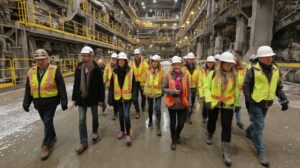
- Management gemba walks — plant manager walks the floor for 15 minutes daily using a standardized observation route; asks operators two questions: what is working well, and what obstacle can I remove
- Monthly 5S competitions — departments compete for best 5S audit score; winning team gets a modest reward (lunch, preferred parking, extra break time); post results prominently
- New hire integration — every new employee completes a 2-hour 5S orientation including the history of improvements, before/after photos, and their specific workstation standards
- Kaizen suggestion system — provide index cards at each station for improvement ideas; review all suggestions within 48 hours; implement at least 30% within 2 weeks
- Annual 5S refresh event — conduct a full re-Sort annually to prevent accumulation; treat it as a factory-wide event with food, team building, and visible leadership participation
According to McKinsey operational transformation research, the single strongest predictor of 5S sustainability is visible leadership participation. In small factories, this means the owner or plant manager must personally conduct or participate in audits at least twice per month. The cost of Sustain is primarily time: approximately 2 to 4 hours per week of management attention distributed across audits, gemba walks, and suggestion reviews. Factories that sustain 5S for 24+ months report cumulative productivity improvements of 30% to 45% compared to their pre-5S baseline.
Budget and Timeline: 5S Implementation for a 50-Person Factory
A realistic 5S implementation timeline for a small factory spans 16 weeks for the initial rollout, followed by 12 months of sustainment before the methodology becomes self-reinforcing. According to NIST MEP, the average small manufacturer invests $8,000 to $25,000 in their first-year 5S implementation, generating $50,000 to $150,000 in measurable savings through reduced search time, lower inventory carrying costs, decreased defect rates, and fewer safety incidents.
Week-by-week budget breakdown:
- Weeks 1 to 2 (Planning) — $500 for training materials, team selection, baseline photography; 16 hours of management time for kickoff planning
- Weeks 3 to 4 (Sort) — $500 for red tags, disposal costs, and a skip container rental; expect to recover $2,000 to $10,000 in usable materials found during Sort
- Weeks 5 to 8 (Set in Order) — $3,000 to $8,000 for shadow boards, floor tape, labels, bins, shelving reorganization; this is the largest single investment
- Weeks 9 to 12 (Shine) — $300 to $600 for cleaning supplies, checklists, and inspection tools; minimal capital but requires 15 to 30 minutes per shift per operator
- Weeks 13 to 16 (Standardize) — $500 to $1,500 for OPLs, audit scorecards, photo boards, and procedure documentation
- Ongoing (Sustain) — $200 to $400 per month for competition rewards, replacement supplies, and refresher materials
The ROI formula for 5S in small factories: (Labor hours saved x Loaded hourly rate) + (Defect reduction x Average rework cost) + (Downtime reduction x Hourly downtime cost) + (Space recovered x Annual square footage cost) – Total 5S investment = First-year net savings. According to ASQ case studies, the median small factory achieves payback within 4 to 6 months and a first-year ROI of 300% to 600% on their 5S investment.
How long does it take to implement 5S in a small factory?
A complete 5S implementation in a small factory (20 to 200 employees) takes 16 weeks for the initial rollout across all five phases, followed by 12 to 18 months of active sustainment before the methodology becomes self-reinforcing. According to NIST MEP, factories that rush implementation into less than 8 weeks experience a 65% failure rate within 6 months, while those following a structured 16-week timeline achieve 82% sustained adoption at the 2-year mark.
What does 5S implementation cost for a small manufacturer?
First-year 5S implementation costs for a small factory range from $8,000 to $25,000, covering supplies ($4,000 to $10,000 for shadow boards, floor tape, labels, bins), training ($1,500 to $3,000 for materials and facilitation), and ongoing sustainment ($2,400 to $4,800 annually for competition rewards and replacement supplies). According to McKinsey, the average small manufacturer generates $50,000 to $150,000 in first-year measurable savings, achieving payback within 4 to 6 months.
What are the most common 5S implementation mistakes in small factories?
The top 5 mistakes are: (1) starting 5S without management commitment, causing 78% of failures according to the Lean Enterprise Institute; (2) skipping the Sort phase and jumping to organizing clutter instead of eliminating it; (3) treating 5S as a one-time event instead of a daily discipline; (4) implementing across the entire factory simultaneously instead of piloting in one area first; and (5) failing to establish audit and accountability systems during the Standardize phase.
How do you measure 5S success in manufacturing?
Track these 6 KPIs monthly: (1) 5S audit score average across all areas (target 4.0+ out of 5.0), (2) tool search time per shift measured via time studies (target under 5 minutes total), (3) unplanned downtime hours attributable to housekeeping issues, (4) safety near-miss reports (increasing reports indicate better awareness), (5) floor space utilization percentage, and (6) employee satisfaction survey scores on workplace organization. According to ASQ, factories scoring above 4.0 on 5S audits consistently show 18% lower defect rates than those scoring below 3.0.
Can 5S work without a dedicated lean coordinator?
Small factories successfully implement 5S without a full-time lean coordinator by distributing responsibilities: appoint a 5S champion (existing supervisor dedicating 4 to 6 hours per week), assign zone owners for each work area, and rotate audit responsibilities among team leads. According to Deloitte, 62% of successful small-factory 5S programs operate without dedicated lean staff by embedding 5S duties into existing roles with clear time allocations and accountability metrics.
Frequently Asked Questions
What are the latest 5S implementation trends for small factories in 2026?
In 2026, small factories are increasingly adopting digital tools like IoT sensors and cloud-based platforms to enhance 5S implementation. These tools help in real-time monitoring and data-driven decision-making for maintaining 5S standards.
How can small factories integrate 5S with digital transformation?
Small factories can integrate 5S with digital transformation by using IoT sensors for real-time data collection, cloud-based platforms for tracking 5S compliance, and AI-driven analytics for identifying inefficiencies and areas for improvement.
You May Also Like




⚙ Related Articles
 Lean Manufacturing
The Ultimate Lean Manufacturing Implementation Guide: Step-by-Step Roadmap for Sustainable Efficiency
16 min read The Ultimate Lean Manufacturing Implementation Guide: Step-by-Step Roadmap for Sustainable Efficiency Stop drowning in wasted time and inventory. This...
 Lean Manufacturing
Maximizing Efficiency: The Ultimate Kaizen ROI Calculator Guide for Manufacturers
Discover how to quantify savings with our free Kaizen ROI calculator. Download now and start projecting your specific savings immediately.
 Lean Manufacturing
5S Methodology in Manufacturing: How Top Factories Cut Waste by 35%
Learn how 5S methodology transforms manufacturing operations. Metrics, industry applications, failure patterns, and a scaling roadmap backed by data.