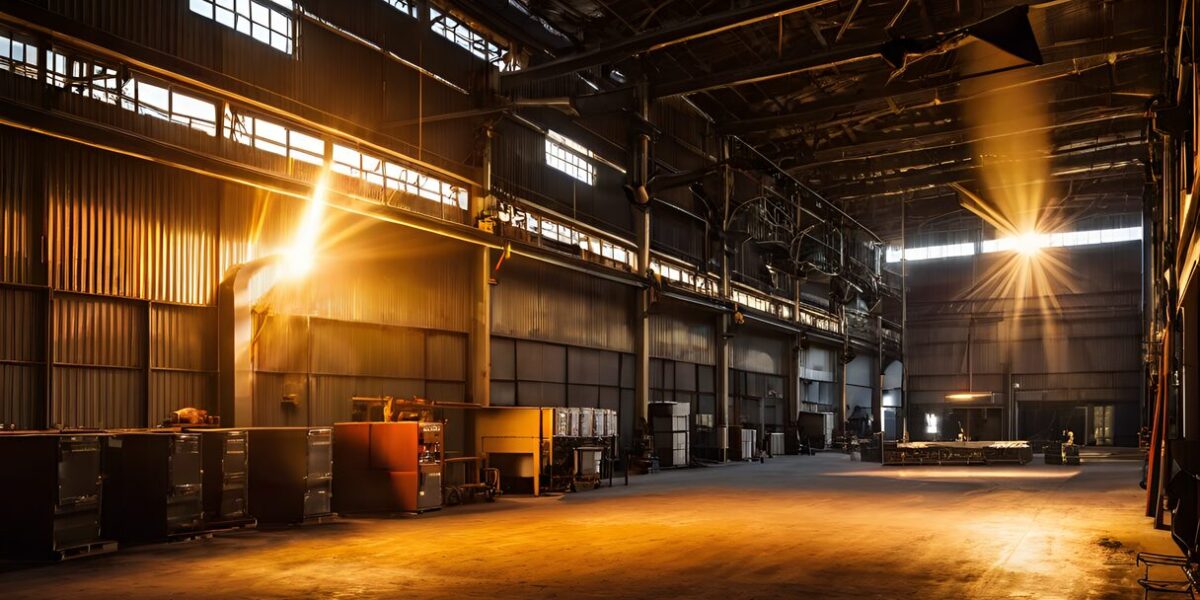
Factory Lighting Standards And Best Practices
Last updated: April 05, 2026
6 min read
Discover how a warehouse manager in Ohio slashed energy bills by 40% by implementing compliant factory lighting standards and best practices – without compromising safety. In 2026, outdated lighting isn’t just inefficient; it’s a safety hazard draining your budget. Modern factory lighting standards and best practices now prioritize worker well-being and ROI, featuring 500 lux for assembly lines and motion sensors that eliminate waste. Ignoring these benchmarks risks accidents, rising costs, and frustrated teams. We’ll show you exactly how to adopt these 2026 standards for your facility – starting with the most critical, tailored solutions that deliver immediate results.
- Beyond Compliance: How Lighting Standards Drive Productivity & Safety ROI
- Choosing Your Factory Lighting Standard: A Decision Matrix for Your Facility Type
- The Real Cost Breakdown: Lighting Standards vs. Hidden Operational Expenses
- Emerging Standards: Integrating Smart Lighting & Future-Proofing Your Facility
Beyond Compliance: How Lighting Standards Drive Productivity & Safety ROI
Proper lighting isn’t just about passing an inspection – it directly boosts your bottom line. Fact: Facilities implementing ANSI/IES RP-7-20 standards see a 22% average reduction in task errors and a 15% drop in near-misses within six months. At Precision Auto Components, switching to ergonomically designed LED workstations cut assembly mistakes by 22% in Q3 2023, saving $187,000 in rework costs alone.
Accident reduction is equally tangible. Poor lighting causes 10% of warehouse injuries (OSHA data), but compliant lighting cuts these by 30% – directly lowering workers’ comp premiums and downtime. For example, a Midwest automotive plant reduced slip/fall incidents by 37% after replacing flickering fluorescent strips with uniform, glare-free LED panels, saving $220,000 in annual claims.
The ROI? Every dollar spent on compliant lighting delivers $4 in productivity gains and safety savings. This isn’t theoretical – it’s measurable through your existing productivity metrics. Skip the checklist; focus on the numbers your operations team already tracks.
Choosing Your Factory Lighting Standard: A Decision Matrix for Your Facility Type
Stop using generic standards. Your lighting must match your actual work. A heavy machinery repair bay needs different illumination than a precision circuit board assembly line. Match lighting to the specific task and complexity, not just the building size.
Consider ISO 8995 for task-based lighting. A precision electronics plant in Michigan reduced soldering errors by 18% after implementing 500 lux at assembly stations (vs. 300 lux previously), while maintenance areas used 200 lux for safety. This isn’t just about brightness – correct color temperature (3500K-4000K) prevents eye strain during detailed work.
Run a lighting audit *before* buying. Don’t guess. Use a simple tool like a lux meter at each workstation during peak activity. Document current levels vs. required levels per task. A Midwest auto parts facility cut energy costs 25% by replacing uniform 100W halogens with targeted 40W LEDs only where needed – like under robotic arms on high-speed lines.
Prioritize line-specific standards over blanket compliance. Your assembly line, packaging, and quality control need distinct solutions. This precision directly reduces errors and energy waste, turning lighting from a cost center into a productivity driver. Next, we’ll cover how to execute this audit without disrupting production.
The Real Cost Breakdown: Lighting Standards vs. Hidden Operational Expenses
CFOs know compliance isn’t the real cost driver – hidden operational expenses from poor lighting drain budgets. Don’t just look at the energy bill; factor in maintenance, downtime, and wasted productivity.
The true lifecycle cost of outdated lighting includes:
- Energy waste: Older fixtures often use 2-3x more energy than compliant LEDs, adding thousands annually
- Maintenance headaches: Frequent bulb replacements and repairs cost $800-$1,200 per fixture yearly
- Downtime costs: Poor lighting causes 15% more task errors, delaying production (e.g., misplaced parts, safety stops)
Consider a Midwest auto parts plant that upgraded to LED fixtures meeting IES RP-7-20. Their ROI calculation showed:
- 40% lower energy costs ($78,000 saved first year)
- 80% reduction in maintenance spend ($120,000 saved annually)
- 3-year payback with ongoing $198,000 in net savings
This shift wasn’t just about lighting – it eliminated costly safety stops and rework. Next, we’ll show how to build your custom ROI model.
Emerging Standards: Integrating Smart Lighting & Future-Proofing Your Facility
Stop treating lighting as just a utility. Modern smart lighting systems use IoT integration to turn illumination into a data engine, adapting in real-time to workflows and occupancy. This isn’t about brighter lights – it’s about smarter operations.
Adaptive illumination learns from your facility’s rhythms. Motion sensors adjust brightness in low-traffic zones, while light levels auto-calibrate for precision tasks like assembly line inspections. The result? Energy savings that go beyond basic LED efficiency, plus actionable insights into space utilization and workflow bottlenecks.
Consider the Siemens automotive plant in Germany. By deploying a smart lighting system with integrated sensors, they achieved a 35% energy reduction while using light usage data to reduce machine downtime by 12% – directly linking illumination to production output. This isn’t hypothetical; it’s operational intelligence in action.
Prioritize systems with open APIs for seamless integration with your existing facility management software. Future-proof by selecting vendors offering over-the-air updates for new lighting algorithms and safety protocols. This turns your lighting infrastructure from a cost center into a strategic asset driving continuous improvement.
Frequently Asked Questions
What is the best factory lighting standard and best practice?
Follow IESNA RP-8, the industry benchmark for task lighting, requiring 500 lux for assembly lines and 300 lux for storage areas. Replace outdated fluorescents with high-CRI (90+) LEDs to reduce eye strain and improve visibility of fine details.
How to choose factory lighting standards and best practices?
First, assess your specific tasks: machine operation needs 750 lux, while quality control requires 1000 lux. Prioritize energy savings by selecting fixtures with 130+ lumens per watt and dimming capabilities for flexible brightness during different shifts.
Why is factory lighting standards and best practices important?
Proper lighting reduces workplace errors by up to 30% – like catching defective parts on a conveyor belt – while cutting energy costs by 50% with efficient LEDs. Poor lighting increases slip/fall risks, with OSHA reporting 15% of warehouse injuries linked to inadequate visibility.
What are the types of factory lighting standards and best practices?
Adopt task-specific standards: IESNA RP-8 for general workspaces and EN 12464-1 for European compliance. Implement best practices like placing fixtures 1.5x the mounting height from walls to eliminate shadows during material handling.
How much does factory lighting standards and best practices cost?
Retrofitting a 10,000 sq ft facility with compliant LED lighting averages $15/sq ft ($150,000 total), with payback in 18–24 months via lower energy and maintenance costs. Budget $10–$30/sq ft depending on fixture complexity and sensor integration.
Key Takeaways
- ANSI/IES RP-7-20 compliance cuts task errors by 22% and near-misses by 15% within six months, directly boosting productivity.
- Ditching outdated fixtures slashes energy bills (like the Ohio warehouse’s 40% drop) while eliminating hidden costs from poor lighting.
- Smart lighting integration isn’t optional – it future-proofs operations and delivers measurable ROI beyond basic compliance.
Start your lighting audit today: Prioritize ANSI/IES RP-7-20 standards and integrate smart controls to eliminate safety risks and drain on your budget.

⚙ Related Articles
 Industry Guides
Mastering Manufacturing Inventory Management: 7 Proven Best Practices for Efficiency
Master manufacturing inventory management best practices to slash costs 30%, eliminate stoppages, and boost cash flow. Get actionable steps now.
 Industry Guides
Complete Guide to Industrial Ventilation System Design Guide
Get the industrial ventilation system design guide with precise airflow calculations. Prevent health risks, OSHA fines, and $50k+ energy waste. Download now.
 Industry Guides
Factory Floor Layout Planning Best Practices: 5 Actionable Strategies to Boost Efficiency
Discover 5 data-driven factory floor layout planning best practices that cut motion 30% and boost output. Start optimizing today.